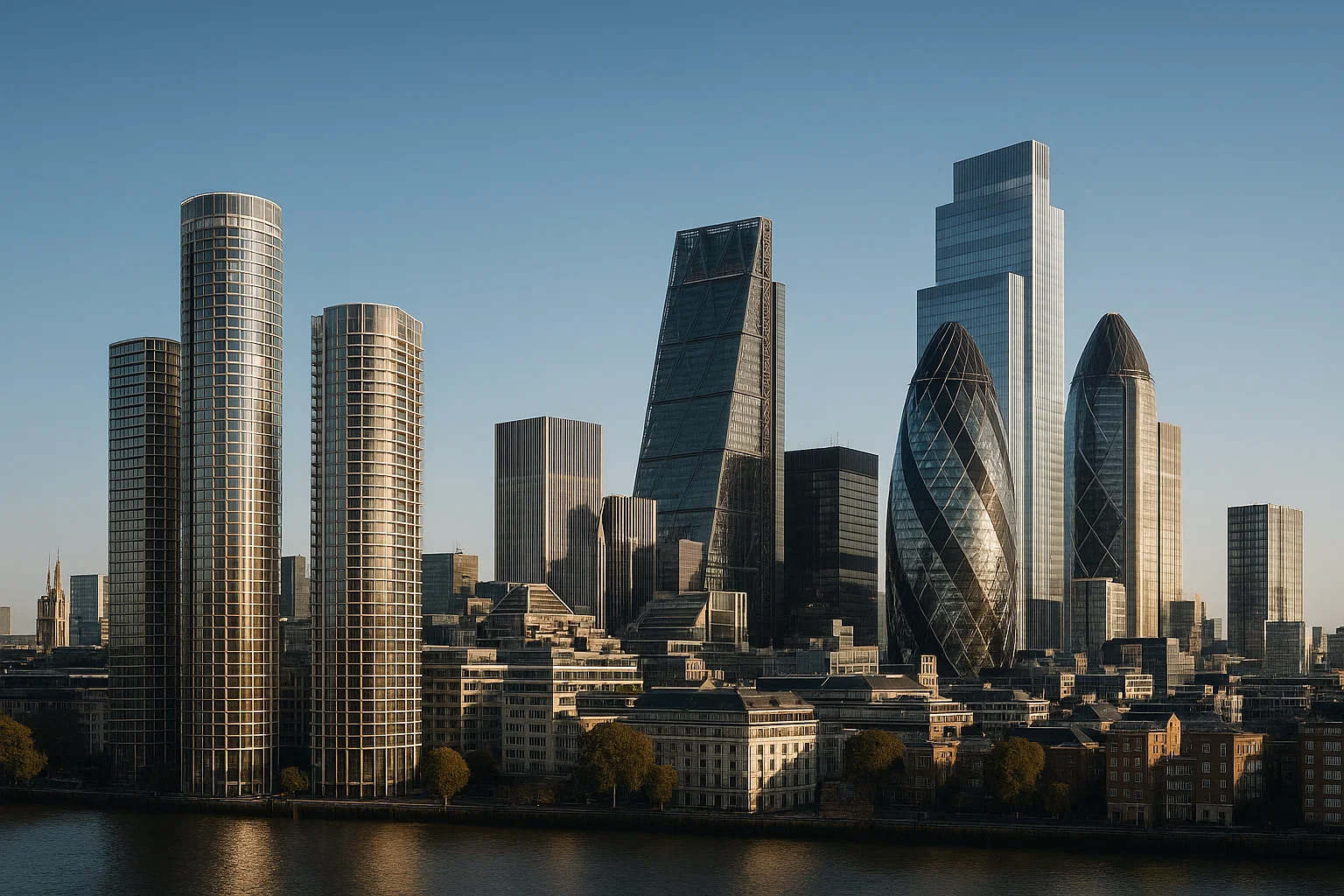
London Property Market 2025: Key Trends Every Investor Should Know
The London property market 2025 is shaping up to be one of the most compelling global real estate stories of the decade. As the world navigates economic shifts, interest rate cycles, migration patterns, new investment policies, and evolving buyer behaviour, London continues to stand out as a resilient and highly desirable market.
For both local and international investors, understanding the current trends is essential to making smart, profitable decisions. This guide explores what is driving the market in 2025, which sectors are showing the strongest growth, the property types performing best, and why strategic partners like Banke UK are more important than ever.
London's Resilience Continues to Outperform Global Markets
Despite global economic uncertainty, London's real estate sector has maintained its historical strength. Investors remain drawn to the city for three core reasons: stability, liquidity, and global demand.
In 2025, London continues to act as a long-term capital preservation hub. High-net-worth individuals, institutional funds, family offices, and international buyers still view London as a safe haven, particularly in periods of global volatility.
The London property market 2025 is also benefitting from a renewed wave of foreign investment — especially from the Middle East, India, China, and Europe — all seeking stable returns combined with long-term capital appreciation.
A Shift Toward Prime and Super-Prime Investment
One of the standout trends in the London property market 2025 is the intensifying demand for prime and super-prime residential assets. Iconic districts such as Knightsbridge, Mayfair, Belgravia, Chelsea, and Marylebone continue to attract investors seeking luxury homes with strong appreciation potential.
Key drivers of this demand include:
- ● Limited supply of high-quality units in ultra-prestigious postcodes
- ● Strong global demand for trophy assets in world-famous locations
- ● Desire for long-term capital preservation and multi-generational wealth planning
- ● Value-add potential through renovation, refurbishment, or redevelopment
Despite higher interest rates, the prime and super-prime segments have remained highly active, showing relative insulation from short-term economic pressures. For many global investors, these assets are less about yield and more about security, prestige, and legacy.
The Rise of Affordable and Mid-Market Investment Zones
At the same time, London's mid-market and emerging districts are seeing strong momentum due to affordability constraints in core central locations. Investors are increasingly targeting areas that offer a balance of price, yield, and growth.
Key mid-market and emerging hotspots include:
- ● Wembley
- ● Woolwich
- ● Canary Wharf
- ● Stratford
- ● Croydon
- ● Ealing
These zones are especially attractive for investors targeting young professionals, expats, and first-time renters.
They typically offer:
- ● Higher rental yields than prime central London in many cases
- ● Long-term regeneration and urban improvement projects
- ● Enhanced connectivity via Crossrail/Elizabeth Line and upgraded transport links
- ● Lower entry costs with strong upside in capital growth
This dual strength across both luxury and emerging markets is a defining feature of the London property market 2025.
Rental Market Demand Is at an All-Time High
London's rental market shortage has become one of the strongest drivers of investment returns in 2025. Demand continues to outpace supply across much of the city.
Key factors behind the rental surge:
- ● Increased migration into London for employment, education, and lifestyle
- ● Fewer private landlords as regulations and tax changes put off some smaller investors
- ● Population growth across Greater London and surrounding commuter belts
- ● Slow delivery of new housing against rising demand
As a result, rental yields have strengthened and vacancy periods have shortened in many boroughs. Some mid-market areas are seeing double-digit rental demand growth year-on-year.
Investors entering the London property market 2025 are particularly focused on:
- ● Studio and one-bedroom apartments in high-demand rental districts
- ● Build-to-rent and professionally managed rental schemes
- ● Properties located close to major transport hubs and employment centres
- ● Regeneration zones supported by long-term infrastructure investment
Regeneration Projects Driving Long-Term Value
Large-scale regeneration remains one of London's biggest long-term value drivers. Public and private sector initiatives are transforming under-utilised districts into new residential, commercial, and lifestyle hubs.
Key regeneration areas shaping the 2025 market include:
- ● Old Oak Common — future HS2 and transport super-hub
- ● Battersea & Nine Elms — riverside transformation anchored by Battersea Power Station
- ● Brent Cross Town — major new mixed-use district in North West London
- ● Canada Water masterplan — large-scale redevelopment of docklands area
- ● Royal Docks revitalisation — major infrastructure and waterside living projects
These corridors often provide some of the best long-term ROI opportunities, with values expected to rise as transport, amenities, and employment clusters mature.
International Buyers Return Stronger in 2025
Following a period impacted by global travel restrictions, 2025 marks the full comeback of international investors in London. Overseas buyer activity has picked up sharply across both prime and mid-market segments.
Key drivers of this renewed interest:
- ● Currency advantages for dollar-, dirham-, and some euro-based investors
- ● London's reputation as a safe, rules-based investment destination
- ● Education-led purchases for children attending UK schools and universities
- ● Relocation and second-home strategies for globally mobile families
- ● Strong legal and regulatory protections for property rights
Developers are increasingly tailoring products to international buyers with features such as flexible payment plans, fully furnished units, and integrated rental management solutions.
The Role of Technology and Transparency
As investor expectations evolve, technology and transparency have become central to London's real estate experience. The market is rapidly digitising, making remote and data-driven investing easier.
Key tech-led shifts in the London property market 2025:
- ● Widespread adoption of virtual viewings and 3D property tours
- ● Remote documentation, e-signatures, and online conveyancing workflows
- ● Comparative data dashboards that allow investors to benchmark yields and prices
- ● AI-driven analytics to identify high-performing postcodes and micro-markets
These tools are making the London property market 2025 more accessible to overseas investors who may never physically visit the asset before completion or purchase.
Sustainability Becoming a Top Investment Criteria
Sustainability is no longer a niche preference; it is now a central decision factor for many buyers and tenants. Green building standards and energy-efficient homes are increasingly seen as non-negotiable.
In 2025, buyers and tenants are prioritising:
- ● Energy-efficient architecture and strong EPC ratings
- ● Smart home technology that reduces consumption and operating costs
- ● Reasonable service charges and efficient building management
- ● Eco-conscious amenities and sustainable materials
Developers who fail to integrate sustainability into their schemes risk weaker demand and slower resale, particularly from institutional and ESG-focused investors.
Why Investors Need Expert Advisory Support in 2025
The complexity of the London property market 2025 means that investors increasingly rely on specialised advisory support. While headline narratives are useful, real performance is shaped by micro-location, asset type, timing, and structure.
Key areas where expert guidance adds value:
- ● Identifying high-ROI zones across prime, mid-market, and regeneration areas
- ● Understanding stamp duty, taxation, and ownership structures
- ● Evaluating developer track records, build quality, and delivery risk
- ● Navigating legal compliance and contract negotiation
- ● Coordinating rental strategies, management, and post-handover services
For many overseas investors, the difference between an average purchase and a top-performing asset is the quality of advice received at the outset.
Banke UK: Your Partner for Strategic London Investments
Banke International Properties has extended its global footprint into the UK through Banke UK, a dedicated advisory platform for international investors targeting London and wider UK opportunities.
What makes Banke UK stand out:
- ● Strong relationships with top-tier London developers and project owners
- ● Access to exclusive projects, pre-launch inventory, and negotiated opportunities
- ● Professional advisory tailored to international investors, including those based in the Middle East, Africa, and Asia
- ● End-to-end services from property selection to after-sales and rental management
- ● Market research based on real, updated data and experience across global real estate portfolios
Whether you are targeting prime luxury residences, high-yield rental units, or long-term capital growth in regeneration zones, Banke UK provides structured, strategy-led guidance tailored to your goals.
Conclusion
The London property market 2025 remains one of the world's most compelling investment stories. With resilience in prime and super-prime sectors, rapid growth in emerging zones, record rental demand, and transformative regeneration, the city continues to offer powerful opportunities for informed investors.
As London evolves, working with a trusted strategic partner like Banke UK ensures each acquisition aligns with market trends, your financial objectives, and your long-term wealth strategy. For investors prepared to think long term and act with precision, London in 2025 is not just a safe haven — it is a launchpad for sustained, global real estate growth.